There's a before Fenty and an after Fenty. And if you were paying attention in 2017, you felt the shift in real time.
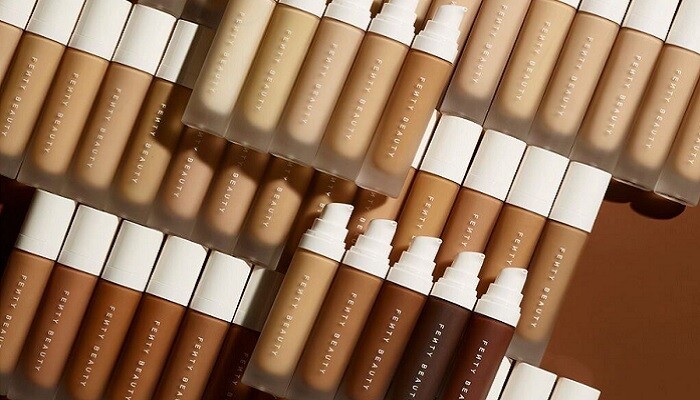
When Rihanna launched Fenty Beauty with 40 foundation shades — later expanded to 50 — it wasn't just a product decision. It was a statement. One that the entire beauty industry had been avoiding for decades. The message was simple and it landed like a sledgehammer: everyone deserves to see themselves here.
But here's what most people miss when they tell the Fenty story. It wasn't just about the shades. It was about how the whole brand was designed to communicate that message at every single touchpoint.
The design did the talking
Before a single person bought a foundation, they saw the campaign. Models of every skin tone, every texture, every undertone — not as a diversity checkbox buried in a secondary campaign, but as the primary visual language of the brand. The product photography wasn't an afterthought. It was the strategy.
Fenty understood something that a lot of brands still get wrong: inclusion isn't a value you write in your About page. It's something you demonstrate through design, over and over again, until it becomes undeniable.
The packaging reinforced it too. Clean, minimal, luxurious — a deliberate signal that this wasn't a "multicultural brand" carved into a corner of the beauty aisle. This was a prestige brand that happened to believe everyone deserved prestige products.
The strategy behind the statement
The genius of Fenty's launch wasn't just moral. It was commercial. By doing what no mainstream beauty brand had done properly, Fenty owned an entire underserved market on day one. Women who had spent years mixing foundations, layering products, and settling for "close enough" suddenly had something made for them. The emotional response was immediate, and it converted.
Fenty didn't just win customers. It won loyalty. The kind that's nearly impossible to buy with a discount code or a giveaway. The kind that comes from making someone feel seen for the first time.
And it held the rest of the industry accountable. Within months, competitors were scrambling to expand their shade ranges. The standard had shifted — because one brand decided to set a new one.
What this means for your brand
You don't need Rihanna's budget to take this lesson seriously. What Fenty did was ask a simple question — who are we leaving out? — and then built their entire brand around the answer.
If your brand exists for a specific community, that community should see themselves in everything you make. Your product photography. Your copy. Your email campaigns. Your website. The design choices you make every day either reinforce your mission or quietly undermine it.
Inclusion isn't a campaign. It's a design system. And when you build it in from the start — the way Fenty did — it stops being a differentiator and starts being the standard.
Which is exactly the point.